RESEARCH DISCLAIMER: The following content is for informational purposes only and does not constitute medical advice. This information is based on public scientific literature and clinical trial data available as of April 20, 2026. This information should not be used for self-diagnosis or to make medication decisions. For research purposes only.
What are GLP-1?
In recent years, a class of drugs known as GLP-1 receptor agonists (glucagon-like peptide-1 receptor agonists) has completely changed the face of treatment for both type 2 diabetes and chronic obesity.
These medications mimic the natural hormone GLP-1, which the body releases after eating. Their main functions are to stimulate insulin production (when blood sugar levels are high), slow stomach emptying (allowing you to feel full longer), and send signals to the brain to reduce appetite.
Let's take a look at the three most important and most discussed drugs in this class.
1. Semaglutide (Pioneer)
Semaglutide is arguably the drug that brought this class of drugs into the global spotlight. It is approved and marketed under several well-known brand names for various uses: Ozempic i Rybelsus (for the treatment of type 2 diabetes) and Wegovy (specifically for chronic obesity treatment).
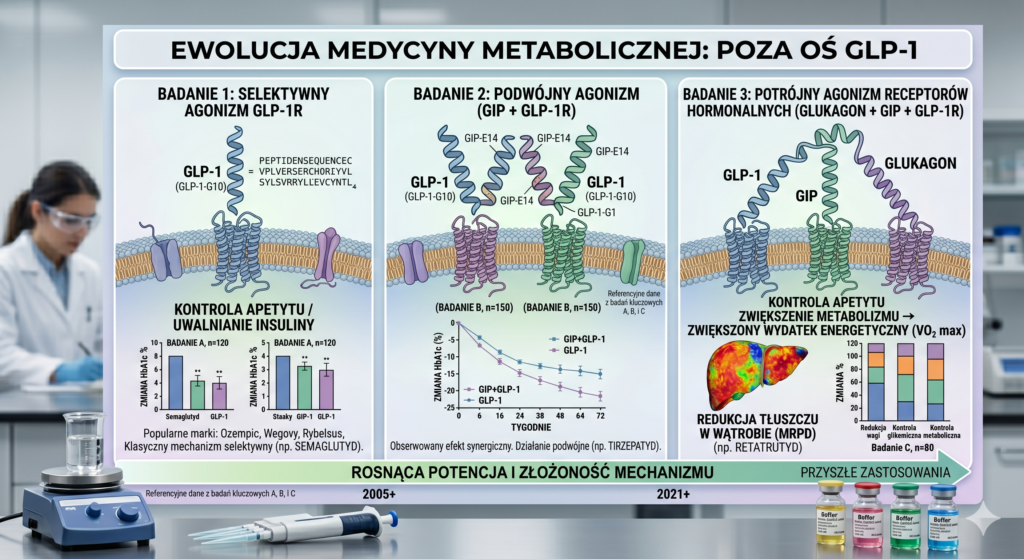
How it works: Semaglutide is a classic selective GLP-1 receptor agonist. By stimulating this single receptor, it effectively helps control blood sugar levels and significantly reduces appetite, leading to significant weight loss in many patients when combined with lifestyle changes.
2. Tirzepatide (Twincretin)
Tirzepatide represents the next major innovation in this field, available under the names Mounjaro (for type 2 diabetes) and Zepbound (for weight control).
How it works: What makes tirzepatide unique is that it is the first approved dual agonist drug. It doesn't just target the GLP-1 receptor; it also affects the receptor GIP (glucose-dependent insulinotropic peptide). This dual action is why it is sometimes called "twincretin." Research suggests that by activating both receptors, tirzepatide may lead to even greater improvements in glycemic control and more pronounced weight loss than drugs that target GLP-1 alone.
3. Retatrutide (Breakthrough Triple Action – "Triple G")
Retatrutide is the newest and most potent agent on this list, and is currently generating a lot of excitement in the medical community, as it is in the third phase of clinical trials.
How it works: Retatrutide is a triple hormone receptor agonist. It is designed to activate three key nutrient-stimulated hormone receptors:
- GLP-1 (Glucagon-like peptide-1)
- GIP (Glucose-dependent insulinotropic peptide)
- Glucagon
The "Triple G" mechanism is considered the most powerful approach to date. While GLP-1 and GIP primarily target insulin and appetite control, the addition of a receptor agonist component glucagon It is hypothesized to increase energy expenditure (the number of calories burned) and improve fat metabolism in the liver. Preliminary results of studies with Retatrutide have shown a percentage reduction in body weight that exceeds the results of both Semaglutide and Tirzepatide.
RESEARCH DISCLAIMER: This information summarizes clinical results to date. Individual patient responses to these medications may vary significantly. Data on long-term efficacy and safety are still being collected, particularly for newer agents. This article is not a substitute for professional medical evaluation, diagnosis, or treatment.